Table of Contents
- 1. Scratching Furniture
- 2. Inappropriate Urination (Outside the Litter Box)
- 3. Aggression Toward People
- 4. Excessive Meowing or Vocalization
- 5. Nighttime Activity (The 3 AM Zoomies)
- 6. Hiding and Fearfulness
- 7. Counter Surfing and Jumping on Tables
- 8. Inter-Cat Aggression
- 9. Chewing on Cords and Dangerous Objects
- 10. Begging for Food
- The Golden Rule of Cat Behavior
Cats are often labeled as mysterious or aloof, but most "problem" behaviors actually make perfect sense once you understand feline psychology. Scratching, hiding, biting, and inappropriate elimination aren't acts of rebellion — they're communication. The key is learning to decode what your cat is telling you and addressing the root cause, not just the symptom.
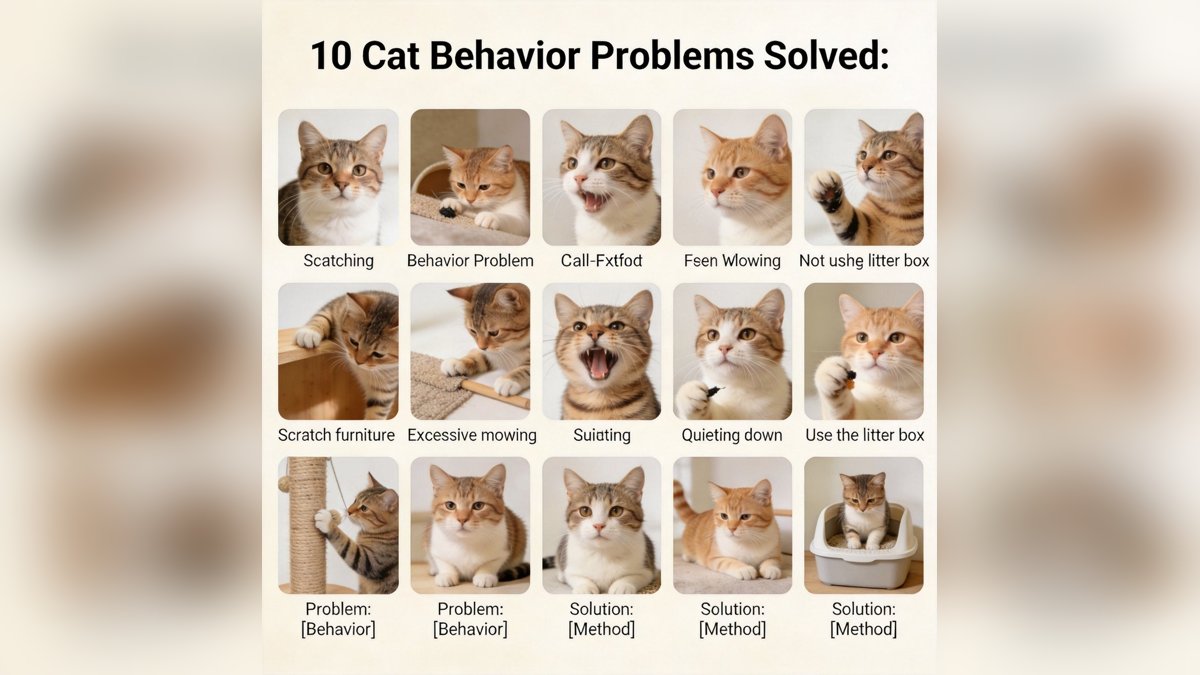
Here are the 10 most common cat behavior problems and exactly how to solve them, based on insights from veterinary behaviorists.
1. Scratching Furniture
Why it happens: Scratching is a natural, instinctive behavior. Cats scratch to mark territory (both visually and with scent glands in their paws), stretch their muscles, and maintain claw health.
How to fix it: Provide multiple scratching posts in strategic locations — near sleeping areas and at room entrances. Experiment with textures (sisal, cardboard, carpet) and orientations (vertical vs. horizontal). Place double-sided tape or aluminum foil on furniture to make it unappealing. Reward your cat with treats when they use their designated posts. Never punish — it creates anxiety without teaching an alternative.
2. Inappropriate Urination (Outside the Litter Box)
Why it happens: This is the number one reason cats are surrendered to shelters. It's often a medical issue first — urinary tract infections, kidney disease, or diabetes cause pain and urgency. If medical causes are ruled out, behavioral causes include: dirty litter box, wrong type of litter, box location, territorial marking, or stress.
Veterinary Insight: According to the ASPCA, 6.5 million companion animals enter US shelters each year. Adopting from a shelter costs 70% less than buying from a breeder.
How to fix it: Visit your vet first to rule out medical causes. Then: have one more litter box than the number of cats (3 boxes for 2 cats), scoop daily and deep-clean weekly, use unscented clumping litter, place boxes in quiet but accessible locations, and use enzymatic cleaners (not ammonia-based) on accidents to fully remove the odor.
3. Aggression Toward People
Why it happens: Petting-induced aggression is common — cats have a threshold for physical contact, and when it's exceeded, they bite or scratch to say "enough." Fear-based aggression happens when a cat feels cornered or threatened. Redirected aggression occurs when your cat is agitated by something else (like a cat outside the window) and takes it out on whoever is nearby.
How to fix it: Learn your cat's body language: a twitching tail, flattened ears, dilated pupils, or skin rippling signals overstimulation. Stop petting before they reach their limit. For fear-based aggression, give your cat escape routes and never force interaction. Never punish aggressive behavior — it escalates the problem.
4. Excessive Meowing or Vocalization
Why it happens: Some breeds (Siamese, Oriental) are naturally vocal. In other cats, excessive vocalization signals hunger, boredom, stress, cognitive decline in seniors, or a medical issue like hyperthyroidism.
How to fix it: Schedule a vet check — especially for senior cats. Establish a predictable feeding routine so your cat stops associating meowing with getting food. Increase environmental enrichment with puzzle feeders, window perches, and interactive play sessions. Never yell back; it scares your cat and damages trust.
5. Nighttime Activity (The 3 AM Zoomies)
Why it happens: Cats are crepuscular — naturally most active at dawn and dusk. When they sleep all day in an empty house, they're full of energy at night.
How to fix it: Schedule two interactive play sessions (15-20 minutes each) — one in the morning and one before bed. Use wand toys that mimic hunting. Feed a substantial meal after the evening play session; cats naturally eat, groom, and then sleep. Provide automated toys or puzzle feeders for nighttime mental stimulation. Do NOT get up to feed or play with a meowing cat at 3 AM — it reinforces the behavior.
6. Hiding and Fearfulness
Why it happens: Some cats are naturally more cautious. Past trauma, a new environment, or sudden changes (moving, new pet, new baby) can trigger hiding.
How to fix it: Provide safe elevated spaces (cat trees, shelves) and covered hiding spots. Let the cat approach you — never pull them out of hiding. Use Feliway pheromone diffusers to create a calming environment. Gradually introduce changes; don't overwhelm a shy cat with visitors or new experiences all at once.
7. Counter Surfing and Jumping on Tables
Why it happens: Cats are naturally drawn to elevated surfaces. Counters and tables also often contain interesting smells, warmth from appliances, and occasionally food — all powerful reinforcers.
How to fix it: Provide alternative elevated perches near the kitchen (cat trees, window shelves). Make counters less appealing: use motion-activated air sprayers or place baking sheets that clatter when jumped on. Keep food put away and counters clean. Reward your cat when they use their designated high spots.
8. Inter-Cat Aggression
Why it happens: Cats are territorial and don't naturally form social groups like dogs. Introducing a new cat too quickly, resource competition (food, litter boxes, attention), or redirected aggression can all trigger fights.
How to fix it: Re-introduce cats using a gradual process: separate rooms, scent swapping (rub a cloth on each cat and place it with the other), feeding on opposite sides of a closed door, then supervised visual contact. Provide multiple, separated resources — food bowls, water stations, litter boxes, and resting spots in different areas of the home. Never let cats "fight it out."
9. Chewing on Cords and Dangerous Objects
Why it happens: Common in kittens and young cats. The texture and movement of cords appeal to hunting instincts. Some cats also have a condition called pica — chewing and eating non-food items — which can indicate nutritional deficiencies or medical issues.
How to fix it: Use cord protectors or bitter apple spray on all accessible cords. Provide safe chew alternatives: silver vine sticks, dental chew toys. If your cat ingests non-food items (fabric, plastic), consult your vet to rule out pica and nutritional deficiencies.
10. Begging for Food
Why it happens: Cats are opportunistic eaters. If begging has ever resulted in food — even once — they learn that persistence pays off.
How to fix it: Feed on a consistent schedule and completely ignore begging behavior. Never feed from your plate. Use puzzle feeders to slow down eating and provide mental stimulation. Ensure your cat is getting enough calories — sometimes "begging" is genuine hunger if portions are too small.
The Golden Rule of Cat Behavior
Punishment — yelling, spraying water, or hitting — does not work on cats. It creates fear, damages your bond, and often makes the behavior worse because the cat is now stressed in addition to whatever caused the original behavior. Instead, identify the underlying need, provide an acceptable outlet, and reward the behavior you want to see. That's the foundation of all effective cat behavior modification.
Mental stimulation is just as important as physical exercise for your pet's overall well-being. Boredom in pets often manifests as destructive behaviors such as chewing furniture, excessive barking, or scratching carpets. Puzzle toys, treat-dispensing balls, and hide-and-seek games engage your pet's natural problem-solving instincts. Rotating toys every few days prevents habituation and keeps novelty alive. For cats, window perches and cat trees provide valuable environmental enrichment. For dogs, nose work games and basic trick training strengthen your bond while tiring them mentally in ways a simple walk cannot match.
Regular veterinary checkups form the backbone of preventive pet care. Most adult dogs and cats benefit from an annual wellness exam, while seniors and animals with chronic conditions may need visits every six months. During these appointments, your veterinarian can catch emerging health issues before they become serious, update vaccinations, and perform routine bloodwork that reveals early signs of kidney disease, diabetes, or thyroid disorders. Many pet owners skip these visits when their animal appears healthy, but preventive care is ultimately more affordable and less stressful than emergency treatment.
Knowing when to seek veterinary attention can save your pet's life. Sudden changes in appetite, water intake, or energy levels warrant a call to your vet. Vomiting or diarrhea lasting more than 24 hours, unexplained weight loss, difficulty breathing, and persistent limping are all red flags that should not be ignored. Likewise, if your pet is hiding more than usual, showing aggression when touched, or refusing to use the litter box or go outside, these behavioral shifts often signal underlying discomfort. Trust your instincts -- you know your pet's normal better than anyone.
Proper nutrition goes far beyond simply filling a bowl twice a day. Every life stage brings different dietary requirements. Growing puppies and kittens need controlled calcium and phosphorus ratios for healthy bone development. Adult pets thrive on maintenance formulas that match their activity level. Senior animals often benefit from increased protein to preserve muscle mass and added joint supplements like glucosamine and chondroitin. The quality of ingredients matters significantly -- named animal proteins should appear first on the ingredient list, and artificial preservatives, colors, and by-products are best avoided altogether.
Dental health is one of the most overlooked aspects of pet care, yet dental disease affects over 80 percent of dogs and cats by age three. Without regular care, plaque hardens into tartar, leading to inflamed gums, tooth loss, and bacteria that can enter the bloodstream and damage the heart, liver, and kidneys. Daily brushing with pet-safe toothpaste is the gold standard, but dental chews, water additives, and specially formulated diets can also help reduce buildup. Annual professional cleanings under anesthesia remain essential for removing tartar below the gum line where brushing cannot reach.
Physical activity is as vital for pets as it is for people, influencing not just weight management but also mental health and behavior. Dogs generally need 30 to 60 minutes of purposeful exercise daily, adjusted for breed, age, and health status. Cats benefit from interactive play sessions that mimic hunting behaviors. Inadequate exercise is a leading cause of obesity, which now affects over 50 percent of domestic pets and contributes to arthritis, diabetes, and reduced lifespan. A tired pet is a happy, well-behaved pet.
Regular grooming is about far more than keeping your pet looking good. Brushing removes loose fur and distributes natural skin oils, preventing mats that can pull painfully on the skin and trap moisture that leads to bacterial infections. Long-haired breeds may need daily brushing to prevent tangles. Nail trims prevent overgrowth that can alter gait and lead to joint pain over time. Ear cleaning helps prevent infections, particularly in floppy-eared breeds. Routine coat care gives you an opportunity to inspect for lumps, bumps, parasites, or skin abnormalities that might otherwise go unnoticed until they become serious health concerns.