Table of Contents
Introduction to Corn Snake Care
Corn snakes (Pantherophis guttatus) are among the most popular pet reptiles in the United States. Their docile nature, manageable size (3-5 feet), and simple husbandry make them ideal for first-time snake owners. This guide covers the three pillars of corn snake ownership: enclosure setup, handling techniques, and feeding protocols. By following evidence-based practices, you can ensure your corn snake thrives for 15-20 years.
Key Fact: According to a 2023 survey from the Association of Reptile and Amphibian Veterinarians, improper temperature gradients cause over 60% of corn snake health issues in the first year.
Enclosure Setup: Creating a Secure Habitat
Size and Type
For adults, a minimum enclosure size is 40 gallons (36" x 18" x 18"). Juveniles can start in a 20-gallon long tank. Screen tops allow ventilation while preventing escapes. Corn snakes are excellent climbers, so a tight-fitting lid with clips is mandatory.
Temperature Gradient
Provide a thermal gradient from 75-78°F on the cool side to 85-88°F on the warm side. Use an under-tank heater (UTH) connected to a thermostat set to 88°F. Basking surface temperature should reach 90°F max. Never use heat rocks--they can cause burns. Monitor with two digital thermometers placed at substrate level.
Humidity and Substrate
Maintain 40-55% humidity. Aspen shavings are ideal: they allow burrowing and resist mold. Avoid pine or cedar. For shedding, increase humidity to 60-70% by misting the enclosure or providing a moist hide filled with sphagnum moss.
Furniture and Hiding Places
Provide at least two hides (one on each end of the gradient). Add branches, cork bark, and fake plants to reduce stress and encourage natural movement. A water dish large enough for soaking should be placed on the cool side. Change water every 2-3 days.
Handling Tips: Building Trust Safely
First Steps
Wait 7 days after bringing your corn snake home before first handling. This allows acclimation. Handle only if the snake is active and calm. Never handle within 48 hours after feeding (risk of regurgitation) or during an active shed.
Proper Technique
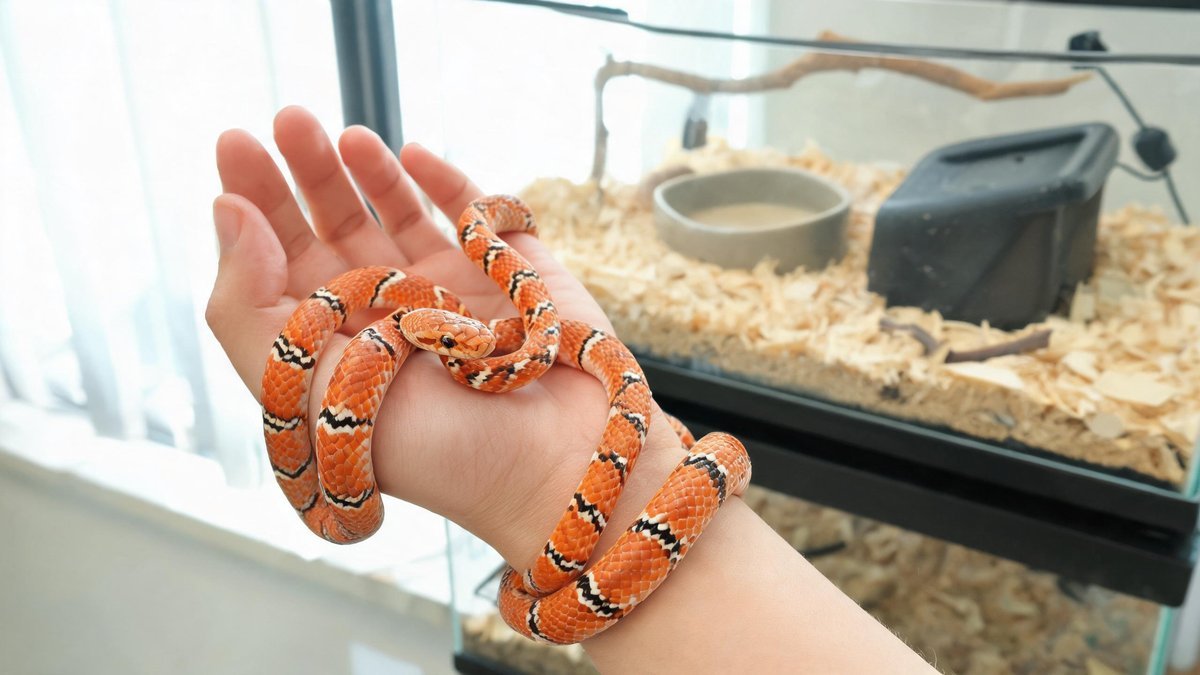
Approach from the side, not from above (a predator cue in snakes). Support at least two-thirds of the body with both hands. Allow the snake to move over your hands rather than gripping it. Initial sessions should last 5-10 minutes, gradually increasing to 20 minutes. Frequency: 2-3 times per week once accustomed.
Pay close attention to your snake's body language during handling sessions. A relaxed corn snake moves slowly with smooth, gliding motions and flicks its tongue regularly to explore its surroundings. If the snake suddenly freezes, tenses its body, or attempts to flee, these are signals that the session should end. Always return the snake to its enclosure calmly and gently, even if the handling session was cut short. Ending on a positive note, without rushing or startling the snake, reinforces trust over time. Consistent, patient handling builds a snake that remains calm during vet visits and tolerates gentle interaction from trusted people.
Signs of Stress
Watch for hissing, tail vibrating, musk release, or freezing. If these occur, return the snake to its enclosure and wait a few days before trying again. Regular gentle handling builds trust; corn snakes rarely bite and even then it's superficial.
Feeding: Nutrition and Schedule
Prey Choices
Feed frozen-thawed rodents exclusively. Corn snakes require whole prey for complete nutrition. Hatchlings eat pinky mice; adults eat adult mice or small rats. A general rule: prey width should equal the snake's widest body part. Thaw frozen prey in hot water (100°F) for 20 minutes until the body feels soft and warm to the touch, then offer with long feeding tongs. Dangle the prey by the tail and wiggle it slightly to trigger the snake's feeding response. Never use your hands to offer food, as this can teach the snake to associate your hand with food and lead to accidental bites.
Feeding Frequency
- Hatchlings (first 6 months): Every 5-7 days
- Juveniles (6-18 months): Every 7-10 days
- Adults (over 18 months): Every 10-14 days
Adjust intervals based on body condition. A healthy corn snake should have a rounded, but not distended, body shape. Obesity is common; reduce feeding if you see fat rolls forming.
Handling After Feeding
Do not handle for 24-48 hours after a meal. This prevents regurgitation, which can damage the esophagus. Provide a fresh water dish always. Snakes often drink after eating.
Shedding: What to Expect and How to Help
Corn snakes shed their skin every 4-8 weeks as juveniles and every 2-4 months as adults. A healthy shed comes off in one complete piece, including the eye caps. Signs of an approaching shed include dull, milky skin coloration, cloudy blue eyes, and increased hiding behavior. During this phase, raise humidity to 60-70% by misting the enclosure twice daily and ensuring the water dish is full. Provide a humid hide filled with damp sphagnum moss. Do not handle your snake during the shed cycle — the new skin underneath is delicate and handling can cause damage. If your snake has a stuck shed (pieces remaining after 10-14 days), a 20-minute soak in a shallow container of lukewarm water (80-85°F) with a textured surface usually resolves the problem. Never attempt to peel stuck shed manually; this can tear the underlying skin.
Health Monitoring: Signs of a Thriving Snake
A healthy corn snake is alert, has clear eyes (except during shed), flicks its tongue regularly, and eats consistently. Weigh your snake monthly using a kitchen scale and track the numbers — unexplained weight loss is often the first sign of internal parasites or illness. Check for mites (tiny black or red dots moving on scales, especially around the eyes and heat pits) during each handling session. Mites require immediate treatment with reptile-safe products. Respiratory infections present as wheezing, open-mouth breathing, or bubbles around the nostrils, and require prompt veterinary care. A well-cared-for corn snake should remain active and inquisitive throughout its life. Any deviation from normal behavior that persists more than a few days warrants a vet visit.
Common Mistakes to Avoid
Beginner keepers often err in several ways: using incorrectly sized enclosures (too large for hatchlings causes foraging issues; too small for adults limits activity); skipping thermostats (leads to burns); feeding live prey (risks injury to the snake); and inconsistent handling regimes. Always quarantine new additions for 30 days.
Conclusion
With proper enclosure setup, patient handling, a reliable feeding schedule, attentive shedding support, and regular health monitoring, corn snakes make rewarding, low-maintenance pets that can live 15 years or more. Stick to the temperature gradient — use a thermostat — respect feeding and shedding cycles, and learn to recognize the subtle signs of a thriving snake. The quiet companionship of a healthy corn snake is one of the most underrated experiences in reptile keeping.
Choosing the right products for your pet can feel overwhelming given the sheer volume of options on the market. When evaluating any pet product, safety certifications and independent testing should guide your decision. Look for brands that employ veterinary nutritionists on staff, conduct feeding trials, and publish their quality control standards. For collars, harnesses, and carriers, fit is paramount. Reading verified customer reviews and consulting your veterinarian before major purchases helps you invest wisely in products that genuinely benefit your pet's health and happiness.
Proper nutrition goes far beyond simply filling a bowl twice a day. Every life stage brings different dietary requirements. Growing puppies and kittens need controlled calcium and phosphorus ratios for healthy bone development. Adult pets thrive on maintenance formulas that match their activity level. Senior animals often benefit from increased protein to preserve muscle mass and added joint supplements like glucosamine and chondroitin. The quality of ingredients matters significantly -- named animal proteins should appear first on the ingredient list, and artificial preservatives, colors, and by-products are best avoided altogether.
Bringing a new pet home is an exciting milestone, but the first few weeks set the foundation for your entire relationship. Create a quiet, safe space where your pet can decompress before exploring the rest of your home. Dogs benefit from a consistent daily schedule for meals, walks, and potty breaks. Cats appreciate vertical space like cat trees or shelves where they can observe from a safe height. Introduce family members gradually and let your pet set the pace for interactions. Patience during this adjustment period pays enormous dividends in the trust and bond you will build over the coming years.
Regular veterinary checkups form the backbone of preventive pet care. Most adult dogs and cats benefit from an annual wellness exam, while seniors and animals with chronic conditions may need visits every six months. During these appointments, your veterinarian can catch emerging health issues before they become serious, update vaccinations, and perform routine bloodwork that reveals early signs of kidney disease, diabetes, or thyroid disorders. Many pet owners skip these visits when their animal appears healthy, but preventive care is ultimately more affordable and less stressful than emergency treatment.
Knowing when to seek veterinary attention can save your pet's life. Sudden changes in appetite, water intake, or energy levels warrant a call to your vet. Vomiting or diarrhea lasting more than 24 hours, unexplained weight loss, difficulty breathing, and persistent limping are all red flags that should not be ignored. Likewise, if your pet is hiding more than usual, showing aggression when touched, or refusing to use the litter box or go outside, these behavioral shifts often signal underlying discomfort. Trust your instincts -- you know your pet's normal better than anyone.
Dental health is one of the most overlooked aspects of pet care, yet dental disease affects over 80 percent of dogs and cats by age three. Without regular care, plaque hardens into tartar, leading to inflamed gums, tooth loss, and bacteria that can enter the bloodstream and damage the heart, liver, and kidneys. Daily brushing with pet-safe toothpaste is the gold standard, but dental chews, water additives, and specially formulated diets can also help reduce buildup. Annual professional cleanings under anesthesia remain essential for removing tartar below the gum line where brushing cannot reach.
Physical activity is as vital for pets as it is for people, influencing not just weight management but also mental health and behavior. Dogs generally need 30 to 60 minutes of purposeful exercise daily, adjusted for breed, age, and health status. Cats benefit from interactive play sessions that mimic hunting behaviors. Inadequate exercise is a leading cause of obesity, which now affects over 50 percent of domestic pets and contributes to arthritis, diabetes, and reduced lifespan. A tired pet is a happy, well-behaved pet.