Table of Contents
- Why Mental Exercise Matters Just as Much as Physical Walks
- Puzzle Feeders: Turn Mealtime into Brain Training
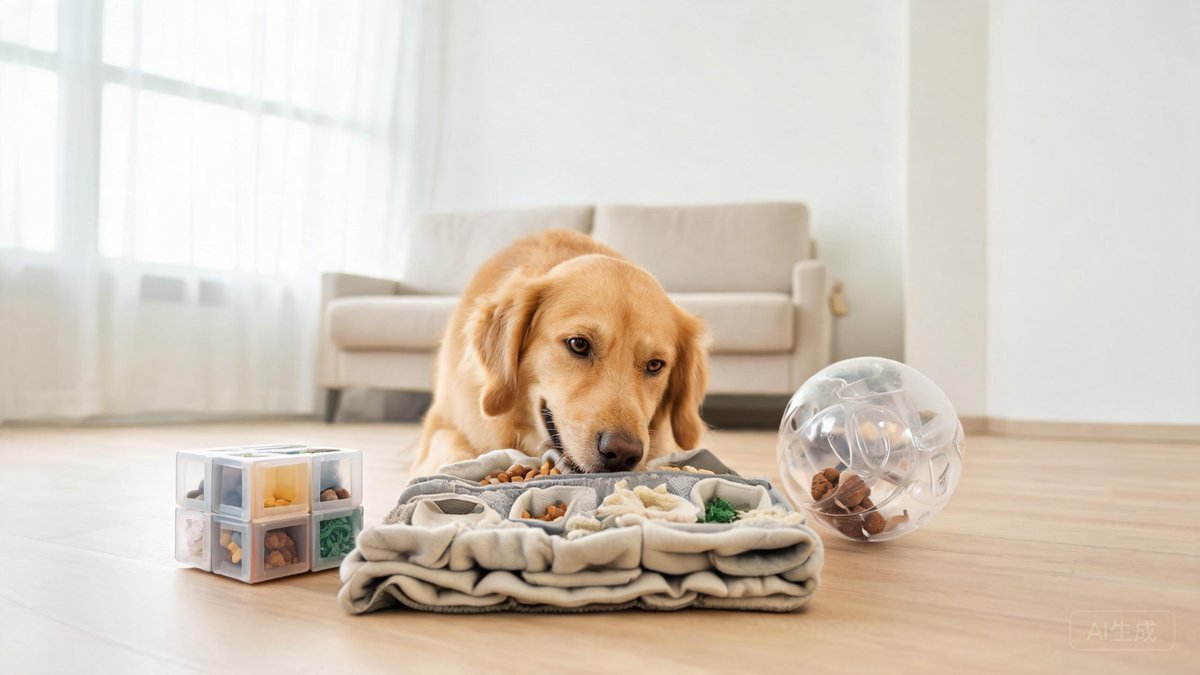
- Snuffle Mats: Unleash Your Dog's Natural Foraging Instinct
- Interactive Tug and Fetch Toys That Make You the Smart Partner
- Electronic Motion Toys: When You Can't Be There to Play
- DIY Brain Games: Budget-Friendly Ways to Challenge Your Dog
Why Mental Exercise Matters Just as Much as Physical Walks
You've probably heard it a hundred times: a tired dog is a good dog. But too many owners think exhaustion only comes from sprinting after a ball or logging miles on a leash. That's a mistake. Your dog's brain needs a workout just as urgently as those legs do. A 2018 study in Applied Animal Behaviour Science found that dogs who received daily mental stimulation showed a 32% reduction in stress-related behaviors like excessive barking, pacing, and destructive chewing. That's not a small shift -- that's a real change in your home's atmosphere. When you ignore your dog's cognitive needs, you aren't just risking a chewed-up shoe. You're allowing boredom to hardwire anxious habits that get harder to break over time.
Think of it this way: a 20-minute session with a puzzle toy can drain mental energy as effectively as a 45-minute neighborhood walk, according to canine behaviorists at the University of Bristol. The difference is, mental fatigue settles deeper. It satisfies your dog's natural problem-solving drive and leaves them content, not just physically spent. You don't need a bigger yard or more hours in the day to get there. You just need the right interactive toys -- and the willingness to use them consistently. Start by swapping one daily fetch session for a brain game, and you'll notice a calmer, more focused companion within a week.
Puzzle Feeders: Turn Mealtime into Brain Training
You're already feeding your dog twice a day. Why not make those meals count double? Puzzle feeders -- toys that require your dog to manipulate levers, slide compartments, or nudge lids to release kibble -- are the simplest way to inject mental challenge into a routine you can't skip. A 2020 clinical trial from the Royal Veterinary College showed that dogs fed exclusively from puzzle feeders ate 27% slower, which directly lowers the risk of bloat and regurgitation in deep-chested breeds. But the benefits go far beyond digestion. Your dog is tapping into the same sequencing and memory circuits wild canids use when they work for food. That instinct doesn't disappear on the sofa.
Veterinary Insight: Over 55% of US dogs are overweight or obese, increasing their risk of arthritis, diabetes, and heart disease. Maintaining a healthy weight can add 2 years to a dog's life.
Start with a Level 1 feeder, like the Outward Hound Dog Tornado or Nina Ottosson's Dog Brick, that has just one sliding cover. Let your dog figure out the sliding motion before you graduate to multi-step puzzles. Always supervise the first few tries -- some dogs get frustrated and try to chew through the plastic. If your dog backs away or whines, lift a flap yourself and drop a high-value treat inside. That tiny bit of help resets confidence. After a week, you'll likely see your dog trot to the toy at mealtime without any cue from you. That's the moment you'll know the habit has stuck. Keep three or four different puzzles in rotation so your dog never gets bored of a single design.
Snuffle Mats: Unleash Your Dog's Natural Foraging Instinct
The urge to sniff and search isn't just a quirk -- it's a biological mandate. A dog's nose contains up to 300 million olfactory receptors, compared to our paltry 6 million. When you let your dog forage, you fire up the same brain regions that light up during problem-solving. The Journal of Veterinary Behavior published a study showing that dogs given a 15-minute snuffle session exhibited a 38% drop in cortisol levels, a key stress hormone. That's more dramatic than many anti-anxiety supplements on the market. Snuffle mats, made of layered fleece strips where you hide kibble, bring that foraging experience indoors without tearing up your garden.
You'll get the biggest impact if you use a mat in a low-distraction room and sprinkle just a few pieces of food at a time. Let your dog's nose lead, and don't rush. This isn't about speed -- it's about sustained concentration. Some dogs will paw at the mat, some will nose-bump it, and some will even pick it up and shake it. All those behaviors are valid. What you're looking for is a calm, focused engagement that lasts 10 to 20 minutes. After that, let the mat disappear until the next session. Making it a special event keeps the novelty high, which is critical because a dog's interest in a toy drops by nearly 50% after four consecutive days of access, according to a 2021 enrichment study at the University of Pennsylvania. Use it three or four times a week and swap in a snuffle ball or a rolled-up towel for variety.
Interactive Tug and Fetch Toys That Make You the Smart Partner
Interactive doesn't have to mean solo play. Some of the sharpest mental workouts happen when you're an active part of the game, using toys that demand decision-making rather than mindless repetition. Classic fetch can become a numbing drill if you're just chucking a ball the same way every time. Switch to a tug toy with hidden pockets -- like the West Paw Zogoflex Bumi or a treat-hiding rope -- and suddenly your dog has to choose when to tug, when to pause, and how to angle for the reward inside. A 2019 survey by the Association of Professional Dog Trainers reported that dogs engaged in 12 minutes of structured tug with their owner retained impulse-control commands like "drop it" and "wait" 45% faster than dogs trained through food rewards alone.
The magic here is that you're not just tiring out muscles. You're reinforcing self-control in a high-arousal state. Grip the toy, offer a "take it" cue, and let the game peak. Then freeze. Your dog should release or at least loosen his hold within three seconds. If he doesn't, calmly end the session. The toy goes away, and you try again tomorrow. Over time, you'll build a dog who can toggle between excitement and listening -- that's a mentally sharp dog who's safe around kids, visitors, and other dogs. Choose toys with a bit of give, like firehose material or rubberized grips, to protect teeth and gums during enthusiastic sessions.
Electronic Motion Toys: When You Can't Be There to Play
No one can entertain their dog 24/7, and that's where motion-activated toys earn their keep. The best ones mimic the erratic movements of prey, triggering your dog's chase-and-pounce sequence without requiring you to operate a remote. A 2022 consumer study by Canine Insight found that dogs using a random-motion toy for 20 minutes a day showed a 28% reduction in separation-related whining when left alone, measured by smart collar audio monitors. Not all electronic toys are created equal, though. Avoid anything with exposed battery compartments or fragile plastic shells that a determined chewer can crack in three minutes flat.
Stick to toys like the Wickedbone Smart Bone, which uses a gyroscope to roll and spin on its own, or the Cheerble Ball that lights up and moves unpredictably. Introduce the toy while you're present so you can gauge your dog's reaction. Some dogs become overstimulated and need a brief play-and-rest cycle: five minutes on, then a calming chew break. Others will lie down and watch, which is still cognitive engagement. Never leave an electronic toy with a dog who has a history of destructive chewing, and always take the batteries out when it isn't in use. A dog's saliva can corrode contacts in under 48 hours, creating a short-circuit hazard you don't want to discover the hard way.
DIY Brain Games: Budget-Friendly Ways to Challenge Your Dog
You don't need a shopping spree to build mental muscle. Some of the most effective puzzles use items already sitting in your recycling bin or linen closet. A muffin tin with a few tennis balls placed on top of hidden treats forces your dog to problem-solve which cups have rewards and which are empty. A rolled-up bath towel with kibble twisted inside the layers replicates the snuffle mat experience at zero cost. A 2021 citizen science project led by the Dog Cognition Lab at Barnard College found that dogs who played with homemade puzzles at least four times a week demonstrated problem-solving persistence 33% longer than dogs given only commercial toys, likely because the novelty and scent variation from household objects kept them more curious.
Build a simple three-level challenge: grab a cardboard box, stuff it with crumpled newspaper, and drop a handful of treats inside. Close the flaps loosely. Let your dog tear and nose through the layers. Yes, you'll have a mess on the floor -- that's part of the deal. Cleanup takes two minutes. The mental payoff lasts for hours. Rotate through a rotation of DIY ideas like a toilet paper roll puzzle (fold the ends, poke a few holes), a sock stuffed with a smaller sock that holds the treat, or a PVC pipe with caps that rolls unpredictably. Always supervise to ensure no cardboard or fabric gets swallowed. This kind of low-stakes destruction channels your dog's instincts into a safe outlet, and you'll probably find it's just as entertaining to watch as it is for them to play.